
Back to the overview
Smile to Vote – Political Physiognomy Analytics, 2017–2024
Interactive installation: VOTING BOOTH
Smile To Vote - Political Physiognomy Analytics is an artistic-scientific research project that explores the impact of AI-based biometric scoring methods on democratic processes, self-determination and privacy in the digital age. This voting booth is part of the Gesamtkunstwerk Smile to Vote, which portrays a fictional GovTech start-up. The work casts a critical spotlight on the hoped-for superhuman objectivity of algorithmic decision-making processes.
Using AI-supported facial recognition, the smile to vote voting booth measures a person's apparent political conviction and emulates the process of casting a digital vote in a general election. The entire process only takes a few seconds: By scanning the visitor's face in the voting booth, the process of casting a vote is automated. The interaction with the smile to vote voting booth makes the complex effects of delegating decisions to AI systems directly tangible and comprehensible as an aesthetic experience.
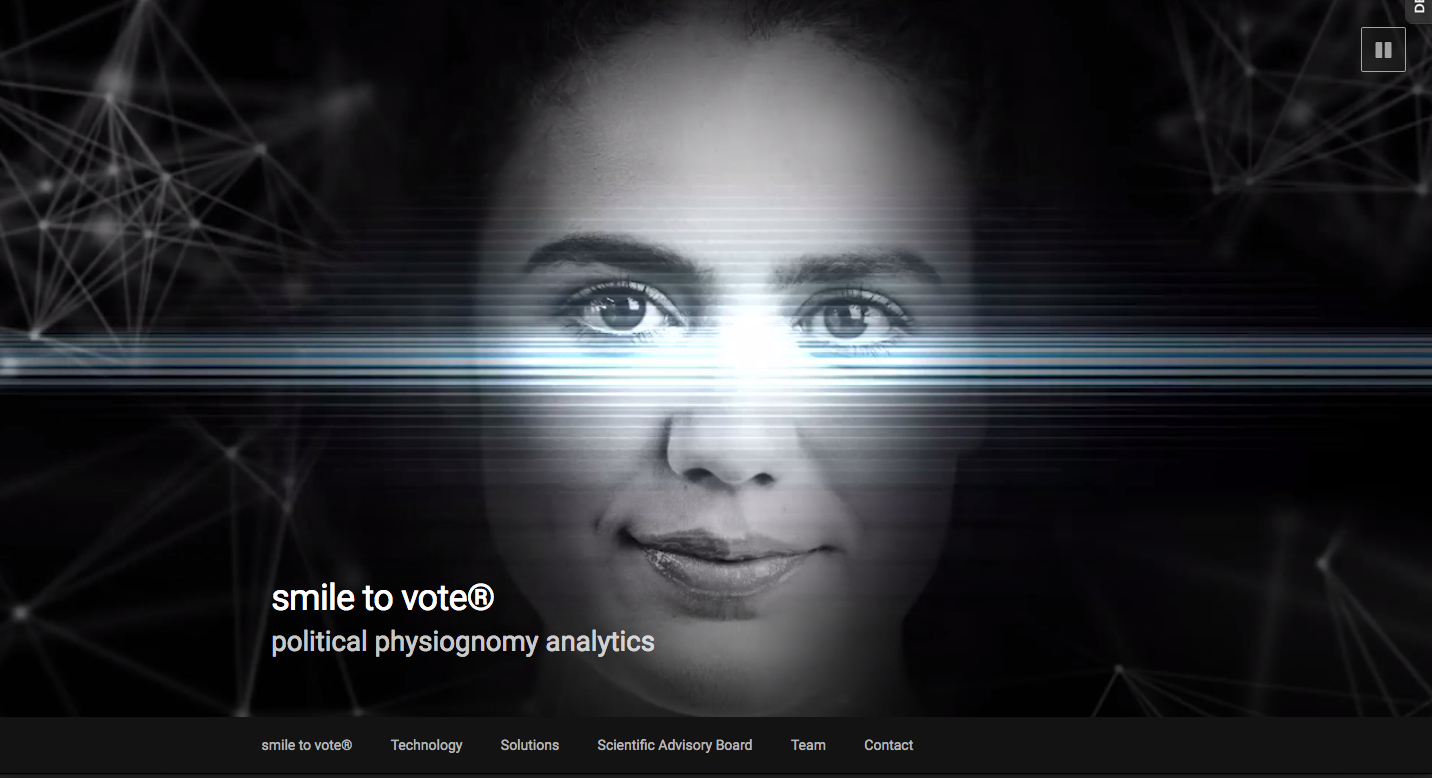
The installation is complemented by a website and a video, both of which oscillate between the plausible and the fantastic in a sophisticated way. Although smile to vote is set in a fictional reality, the idea of such a voting booth is not entirely outside the realm of possibility, as it is based on technologies and methods that are already used in other areas.
Using AI-supported facial recognition, the smile to vote voting booth measures a person's apparent political conviction and emulates the process of casting a digital vote in a general election. The entire process only takes a few seconds: By scanning the visitor's face in the voting booth, the process of casting a vote is automated. The interaction with the smile to vote voting booth makes the complex effects of delegating decisions to AI systems directly tangible and comprehensible as an aesthetic experience.
The installation is complemented by a website and a video, both of which oscillate between the plausible and the fantastic in a sophisticated way. Although smile to vote is set in a fictional reality, the idea of such a voting booth is not entirely outside the realm of possibility, as it is based on technologies and methods that are already used in other areas.
Video: PREDICTING ELECTORAL BEHAVIOUR FROM LIVE VIDEO / Website: SMILETOVOTE.COM
The conceptual art work makes use of several media and combines scientific and artistic methods. Using speculative design, the work portrays the fictitious GovTech start-up smile to vote and its top product of the same name: an ultra-efficient e-voting booth. In addition to the voting booth, Smile to Vote consists of a deceptively real company website (SMILETOVOTE.COM) and a video that ironically mimics the standardized aesthetics of scientific presentation videos. The video "PREDICTING ELECTORAL BEHAVIOUR FROM LIVE VIDEO" explains the methods on which the installation is based and the voting process. It also addresses the current debate about fake science.
Against the backdrop of AI-optimized micro-targeting in election campaigns and the increasing acceptance of IT-supported facial recognition for everyday business processes, Smile to Vote focuses on current research findings in psychometrics for potential application as a maximally efficient e-government tool. It raises questions about the (in)human characteristics of IT processes that shape and co-decide the reality of our lives and stimulates discussion between science, politics and society about the desirable design of IT infrastructures.
Against the backdrop of AI-optimized micro-targeting in election campaigns and the increasing acceptance of IT-supported facial recognition for everyday business processes, Smile to Vote focuses on current research findings in psychometrics for potential application as a maximally efficient e-government tool. It raises questions about the (in)human characteristics of IT processes that shape and co-decide the reality of our lives and stimulates discussion between science, politics and society about the desirable design of IT infrastructures.
Pop-up Exhibition part of AHA – The Science Communication Hub place from January 27 to March 21, 2025, at the Deutsches Museum.
Deutsches Museum
Museumsinsel 1
80538 Munich
Deutsches Museum
Museumsinsel 1
80538 Munich
@alexanderpeterhaensel
www.alexanderpeterhaensel.com/stv
Research Lead & Artistic Direction: Prof. Alexander Peterhänsel
Executive Production: audiovisual architectures lab
Research Assistance & Software Development: Julian Netzer
Research Assistance & Production Assistance: Christopher Höhn
Cast: Anna Anders, Julian Netzer
Voiceover: Adam Gardiner
Support: AHA - The Science Communication Hub