
Bavarian State Collections of Natural History
Nature's Design
Structures and ecosystems
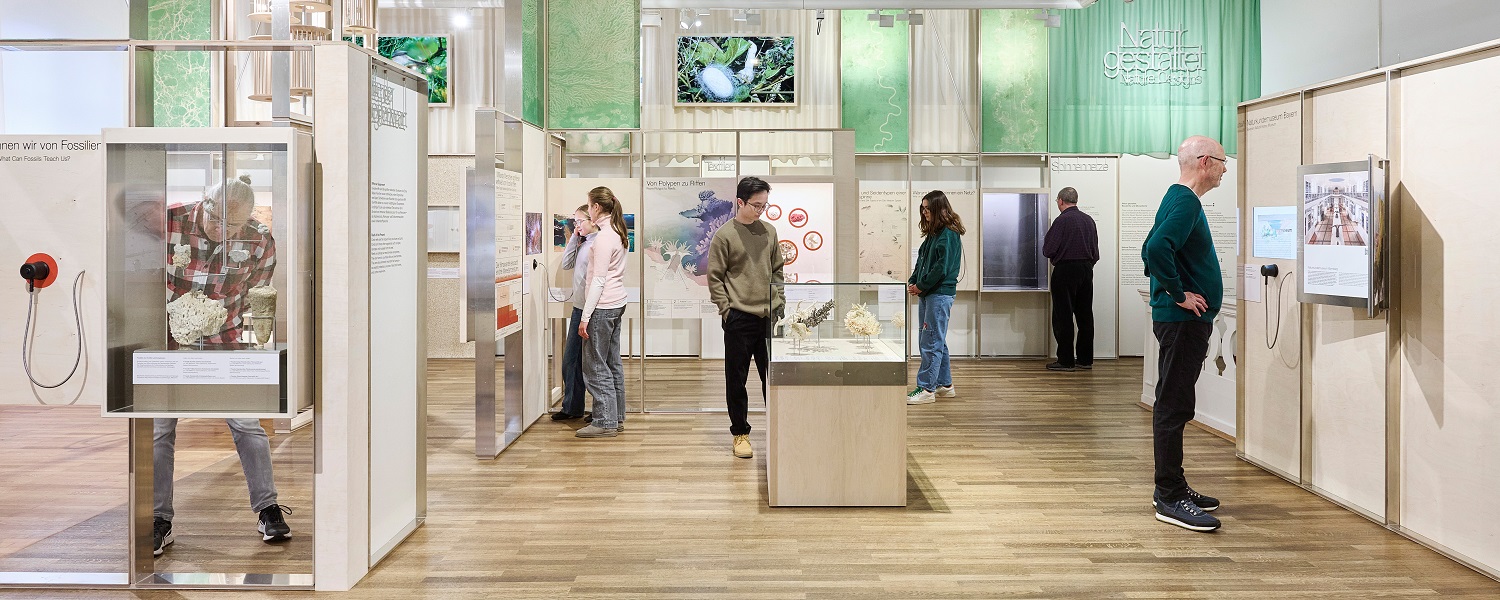
What strategies have animals developed to shape their environment according to their needs? What materials do they use for their constructions? How do construction activities affect their habitat - and what can we humans learn from this for our construction and production processes?
The first Exhibition the Bavarian Natural History Museum's Future Lab shows that humans aren't the only ones who can build complex and elaborate structures and buildings. Other animals have also come up with clever ways to catch prey or protect themselves and their young from heat, cold, or attacks from enemies.
At the same time, the structures and growth processes of other living beings have always served as a source of inspiration and a model for human constructions. Some species of wasps, for example, chew wood fibers to produce a paper-like substance made of cellulose for their nests. This observation led to the development of industrial paper production from wood in the 19th century. Conversely, other animals also use human or man-made materials for their structures—for example, hair, plastic, and metal parts, which are woven into bird nests alongside twigs, lichen, or clay.
"Nature Designs" exemplifies how the building practices of different living beings are intertwined and encourages reflection. This is because human building and production practices have a particularly serious impact on all life on Earth. What strategies could we humans use to steer development in a positive direction and preserve valuable, species-rich habitats?
Category
Language
Organizer

Exhibition

On site
Fr.,
06.12.2024
–
So.,
08.11.2026
Museum of Man and Nature, Nymphenburg Palace, 80638 Munich
✕